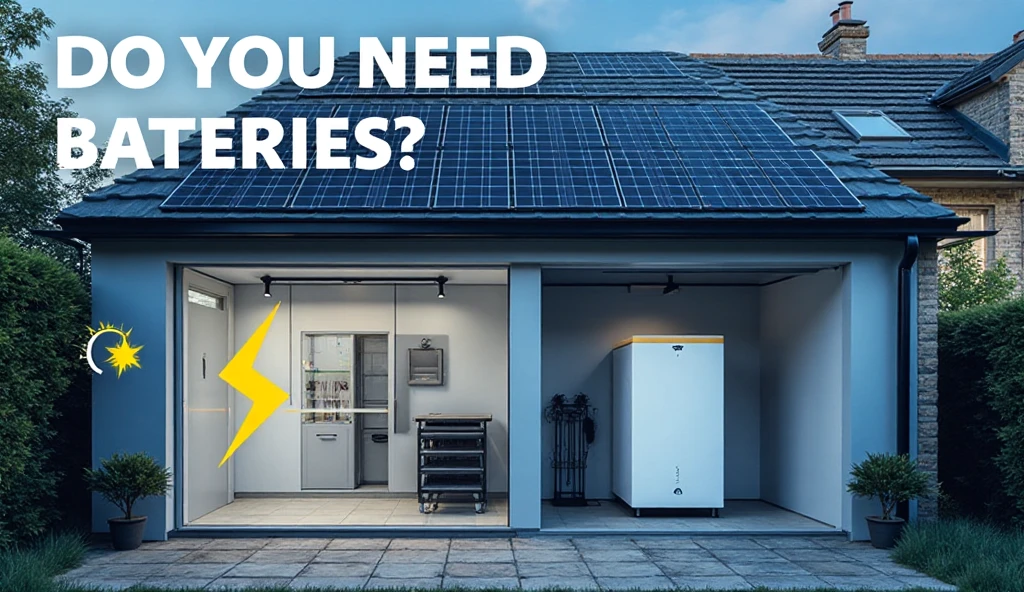
As more UK homes and businesses install solar panels in 2025, one key question often arises: is battery storage really necessary? With high electricity prices, increasing use of renewable energy, and the growing need for energy independence, battery systems are becoming more common across the UK. But are they essential for everyone, or only worth it in certain situations?
What Does a Battery Storage System Do?
A battery storage system stores excess electricity generated by your solar panels during the day and allows you to use it later, typically in the evening when demand is higher and sunlight is no longer available. Without a battery, unused solar energy is sent back to the grid and you must buy back electricity when the sun isn’t shining. With a battery, you keep more of the energy you generate and reduce your reliance on the grid
Are Batteries Needed for Solar Panels to Work?
No, batteries are not required for solar panels to operate in the UK. Your solar PV system will function perfectly well without a battery and will still save you money. You’ll continue to use your solar energy during daylight hours and export any excess back to the grid under the Smart Export Guarantee. However, without a battery, you’ll still need to buy electricity during evenings or cloudy days at full retail rates. A battery simply gives you more control and a higher degree of energy independence
How Much Do Solar Batteries Cost in the UK in 2025?
Battery prices have fallen significantly over the past few years. In 2025, a typical 5–10 kWh residential battery system in the UK costs between £3,000 and £6,000 including installation. Larger systems for businesses or properties with high consumption may cost £10,000 or more. Many installers now offer flexible financing, leasing, or bundling options with solar panel packages, making battery storage more accessible. While not cheap, batteries are increasingly seen as a strategic investment for reducing long-term energy bills
When Do Batteries Make Financial Sense?
Battery systems make the most financial sense in households or businesses that use a significant amount of electricity during evening hours or overnight. If you are often exporting excess solar energy during the day but then buying back grid electricity at night, a battery can help you shift more of your solar power to the times you actually need it. They are especially cost-effective in regions where peak-time electricity rates are higher, or for users with time-of-use tariffs that charge more at certain hours. Additionally, if you live in a rural area with an unstable grid or frequent outages, battery backup adds resilience and uninterrupted supply
What Is the Payback Period for Batteries?
The payback period for solar batteries in the UK varies widely depending on system size, electricity usage patterns, and energy prices. In 2025, most residential systems have a battery payback period of around 8 to 12 years. When paired with solar PV and used efficiently, the total system payback can be shortened. For commercial premises with higher electricity costs or where batteries help avoid demand charges, the return on investment can be faster. Some users prioritise battery storage not purely for financial reasons but for energy security and independence from price volatility
Do You Still Qualify for SEG Payments If You Have a Battery?
Yes, you can still receive payments under the Smart Export Guarantee even if you have a battery. However, only the electricity that is exported back to the grid is counted for SEG payments, and it must be metered. Some SEG suppliers require proof that exported electricity originated from solar panels and not from stored grid electricity. An MCS-certified installer can ensure your system meets the export criteria and that your battery configuration doesn’t disqualify you from income opportunities
Can Solar Batteries Power a Home During Blackouts?
Yes, but only if your system includes blackout protection or an “islanding” function. Most standard grid-tied solar battery systems will shut down during a power cut for safety reasons, unless equipped with a backup power module. In 2025, many advanced battery systems now offer seamless switchover to stored power during outages. This can keep essential loads like lighting, refrigeration, or internet running even when the grid fails. Businesses that rely on continuous uptime or homeowners in remote areas may benefit greatly from this added functionality
Are There Any UK Grants or Incentives for Batteries?
At present, there are no nationwide battery-specific grants available in the UK. However, battery systems can be included as part of broader energy efficiency upgrades under schemes like ECO4 or the Home Upgrade Grant in some cases. In Scotland and Wales, local authorities or devolved programmes may offer partial support for battery storage as part of renewable installations. Some installers also provide their own incentives or discounts when batteries are purchased alongside solar panels. Always check local availability or regional pilot schemes for potential support
How Batteries Work with Smart Tariffs
Many UK energy suppliers in 2025 now offer smart tariffs or agile pricing, which means electricity prices vary throughout the day. Batteries can be programmed to charge during the cheapest hours (such as overnight) and discharge during peak hours when prices are highest. Even without solar panels, a battery alone can generate savings by time-shifting energy usage. For solar owners, combining battery storage with smart tariffs like Octopus Agile or Intelligent Octopus can enhance savings even further
Are Batteries Suitable for Commercial Buildings?
Absolutely. Commercial and industrial buildings often have higher energy consumption and greater exposure to time-of-use pricing or demand charges. Installing a battery can smooth out peak demand, lower overall electricity bills, and improve grid independence. Warehouses, retail outlets, schools, and hospitality venues are all increasingly turning to battery storage as part of their wider energy strategy. Large-scale systems can also provide frequency response services to the grid, creating an additional income stream through flexibility markets
Final Verdict: Are Batteries Needed in the UK?
Batteries are not essential for every solar panel installation in the UK, but they are becoming more desirable and viable each year. They allow you to keep more of the energy you generate, protect against rising electricity prices, and provide greater flexibility in how and when you use your power. For households with high evening usage, rural homes, and businesses seeking stability or higher returns, a battery can be a smart addition. For others, especially with lower usage patterns or smaller budgets, solar panels alone still offer significant benefits. As technology advances and prices fall, battery storage will likely become a standard part of most new UK solar systems